
Every year, I am amazed as I learn more about genetics and inheritance. There is a lot of knowledge I have gained that you will not find in textbooks, but that I can clearly see through life experiences. I would like to share a little bit of my observations when it comes to the inheritance of behavioral characteristics.
A Pointer Points, A Retriever Retrieves
Besides physical traits, dog breeds usually have personalities, temperaments, and other behavioral traits that people associate with them. Some are unwarranted, like “All Pit bulls are mean,” but some can be more warranted, for example “Golden retrievers are the sweetest dogs.” People will choose a Labrador retriever because they want a family-friendly dog that plays fetch and enjoys swimming in the lake. Or they may choose a mixed breed like a Cavapoo because their neighbor has one, and it is very sweet and cute. Almost every person though has some preconceived ideas about the breeds they are interested in.
The #1 Misconception
The flaw or trap I see most people fall into is putting breed above everything. We want a Boxer or a Golden because they are the most social, love everyone, and this trait is the most important thing to us. Don’t get me wrong, breeds have stereotypical characteristics for a reason, but it is not the end-all, be-all. I’ve seen aggressive Boxers and Goldens that you should not trust your kids around, even though it is true that the majority I have interacted with are extremely sweet.
The #1 most important factor in determining the characteristics of the offspring is… the parents. Wow, groundbreaking information, right? However, it is rare for people to ask me about the personalities of the parents (even though I usually provide that information) when it comes to dogs, and it is extremely rare for people to ask about the personalities of the parents of the farm animals I sell. It is 100% true that the sweetest cows produce the sweetest calves.
The Russian Silver Fox Domestication Experiment
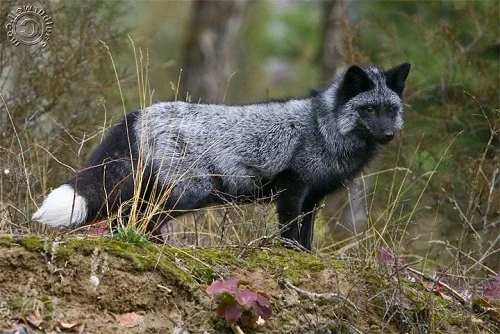
One of the coolest experiments in animal behavior was done in the 1960s by Dmitry Belyaev. I’ll summarize it briefly. Belyaev started with around 130 wild foxes and noted which were the calmest and friendliest. Of course, I’m sure none of them let him stick his hand in there and pet them at this point, but some were more curious and less aggressive than the others.
The least aggressive foxes were then set up as breeding pairs. Out of those offspring, the least aggressive and most calm were again put into breeding pairs. Within three to four generations, they were wagging their tails and licking him. Within ten to twenty generations, they followed people, enjoyed being petted, and became stressed when left alone. This is completely the opposite of their natural behavior.
In the end, we learned that traits like aggression and friendliness are inheritable, not just the result of how animals are raised.
The Importance
The greatest predictor of the personality of the offspring is the personality of the parents. Puppies and dogs are a long-term commitment, so you should think carefully about what is most important to you. Is it more important that you get the breed you always envisioned, the breed you saw on the internet and liked, or is it more important that you get a dog that is complementary to your lifestyle? Are you asking the breeder the right questions?
What should you say to the breeder?
“I am looking for a male puppy that will mature around 10–20 pounds, be easy to train, great with young children, and enjoy just hanging out on the couch. Do you have any recommendations?”
“I am looking for a female puppy that will mature around 40 pounds, be a little more independent since I live in an apartment and I will be out for four hours at a time. I also like the look of Bernedoodle colors. I enjoy going on eight-mile runs as well, and I would like it if the dog could come along with me.”
As a Breeder, this information helps me think about the traits of the adult dogs that are most likely to fit your needs. Whereas, if you just go to a pet store and pick a random puppy, you have no clue about the traits that are already in that puppy’s DNA. Many traits may not show themselves until an older age as well.
This is why the selection of a breeder is so important. If a breeder sees behavioral issues in a bloodline, like aggression or extreme timidness, are they going to take a loss to their profits and do the right thing, or are they going to put profit above all else?
Conclusion
As someone that has raised over a thousand puppies and watched hundreds of them as they have grown up… put more priority on the temperaments of the parents and grandparents. Breeds do have an influence on behavior, but there can be a large variety of temperaments within the same breed and/or species.
-Malachi